


Plants on Fire: Clash & Defend
4.873.00 Reviews
App Specs
- Version
- 1.0.1014.0
- Updated On
- License
- Free
- Downloads
- 10,000+
- Developer
- Shimmer Dream
- Categories
- Strategy
- Platform
- Android
Screenshots
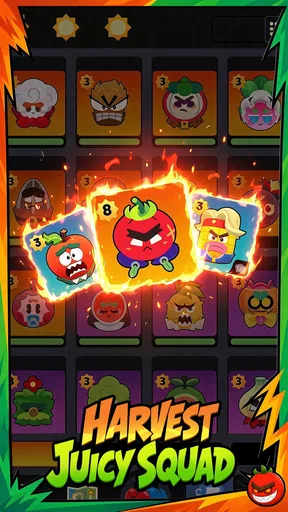
 Analysis by AppCompare
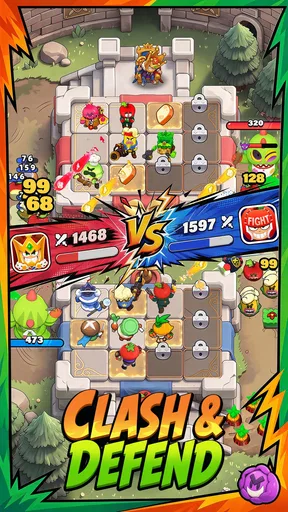
I approached Plants on Fire: Clash & Defend as the sort of strategy game that can fill a short break without asking for a long campaign commitment. Its central appeal is easy to understand: you combine plants, build a defensive plan, and face another player in a compact battle. That sounds simple, but the three-minute format changes how I think about every move. There is little room to recover from a careless merge, so the game rewards quick reading, restraint, and a willingness to adjust rather than repeat one favorite pattern.
It is a free strategy game from Shimmer Dream, with an Everyone age rating and a minimum requirement of Android 7.0. The current version is 1.0.1014.0. I would describe it as a good fit for someone who enjoys tower defense but wants shorter sessions and more direct competition than a traditional solo map usually provides. It is not the ideal choice if you want a deep story, a relaxed pace, or a completely predictable experience.
How it fits into a shared household
The strongest everyday use case is a shared device that moves between people during small gaps in the day. One person can play a quick match while waiting for dinner, hand the phone over, and another person can take a turn later without needing a long uninterrupted session. Because the battles are designed around a short time window, the game is easier to fit around household routines than a strategy title that expects twenty or thirty minutes of concentration.
That convenience comes with an important practical boundary: a short match is still a focused match. If someone is watching a video, doing homework, or handling a conversation, the rapid decisions can make the game feel demanding rather than casual. I found it best to treat each battle as a small appointment. Starting one while distracted makes it much harder to notice when a merge is valuable, when a defensive position is becoming vulnerable, or when saving a plant is wiser than immediately combining it.
On a shared phone or tablet, I would also agree on whose turn it is before opening a match. That sounds obvious, but competitive games are less forgiving when another person grabs the device halfway through a battle. The player needs to remember the current board, the plan behind the last merge, and the threat that is developing. A simple household rule—finish the active match before handing over the device—keeps the experience much less frustrating.
The short format is convenient, but it is not mindless. Three minutes creates a useful middle ground between a full tower-defense level and a one-tap arcade distraction. It is long enough for a plan to develop and short enough for a spare moment, yet every second matters. That makes it entertaining for quick sessions, while also making it a poor choice for someone who wants a game they can casually pause and ignore.
What the first sessions teach you
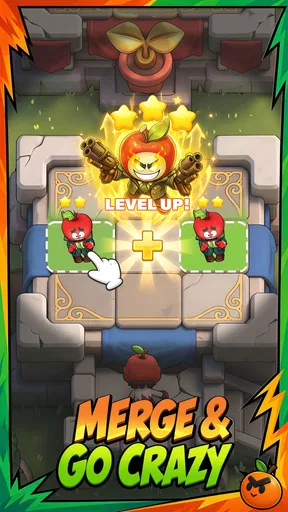
The opening experience is easiest to understand if you think in terms of priorities rather than individual plants. Merging is not automatically good simply because it produces something stronger. The real question is whether the new plant improves the position you need right now. Combining too early can leave a gap in coverage, while waiting too long can waste space and prevent useful pieces from arriving where they are needed.
Worth Reading Before You Choose

EA SPORTS FC Mobile 26 Is a Bigger Football Game, but It Takes Time

Flipboard Shows What News Apps Must Do Beyond the Feed

Switching to Android Auto Means Rethinking Your Driving Routine

Google Calendar Makes a Crowded Week Easier to Manage

Ludo King Makes the Most of the Minutes Between Plans

Baby Panda World Brings Quick Play to Modern Phones, but Its Game Library Feels Busy
My first practical tip is to look at the whole defensive arrangement before merging. It is tempting to focus on the most obvious pair, especially when the game presents several possible combinations. Instead, I would check which area is under the most pressure, whether a merge will remove useful coverage, and whether keeping two separate plants gives better flexibility for the next few moments. This small pause is more valuable than trying to perform every action as quickly as possible.
A second useful habit is to separate emergency moves from long-term moves. An emergency merge is the one that prevents an immediate collapse or answers a sudden threat. A long-term merge is made because it should create a stronger board later. Mixing those two intentions often leads to awkward decisions: you spend a valuable combination to solve a minor problem, then have nothing ready when the opponent creates real pressure. I found matches more manageable when I decided which kind of move I was making before committing to it.
The game’s competitive structure also means that copying a successful opening is not enough. A pattern that works against one rival can be exposed by a different tempo or arrangement. I would use early matches to learn how quickly I need to react, rather than treating them as proof that one plant combination is always superior. That approach makes losses more informative and reduces the temptation to blame the result on luck alone.
Coordination when more than one person plays
Plants on Fire: Clash & Defend is not presented as a cooperative household game, so coordination happens outside the match rather than through a shared team plan. That does not make shared use difficult, but it changes what families or roommates should expect. Two people can enjoy comparing results, discussing merges, or taking turns with the device, yet each battle remains the responsibility of the person currently playing.
For younger players, an adult can make the experience more useful by asking them to explain a decision instead of simply taking over. Questions such as “What are you protecting?” or “What happens if you merge those now?” encourage strategic thinking without turning the session into a lesson. I prefer this approach because the game’s value is not only in winning; it is also in learning to weigh a short-term improvement against the shape of the entire defense.
For siblings, the fairest arrangement is to avoid coaching during an active match unless the player asks for help. Fast PvP battles can become tense when another person gives constant instructions from beside the screen. A better routine is to discuss the match afterward: which merge changed the position, when the defense began to weaken, and whether a different choice would have preserved more options. That keeps the competitive element friendly and gives both players a chance to improve.
On a device used by several people, it is also sensible to keep spending decisions separate from ordinary play. The game is free to download and includes in-app purchases ranging from $0.99 to $199.99 per item. I would not let a child or casual user make purchase decisions without the device owner’s agreement. Even when the game is enjoyable without spending, the presence of optional purchases makes a clear household rule worthwhile: play freely, but ask before buying anything.
Age, trust, and the right kind of supervision
The Everyone rating makes the game approachable for a broad audience, and its plant-based presentation is much lighter than a strategy game built around realistic combat. Still, an age label does not tell you whether the style suits every child. The competitive pressure, quick decisions, and possible purchase prompts matter more to a household than the visual theme alone.
I would be comfortable introducing it to a child who already understands that losing is part of a competitive game and who can stop after a match. I would be more cautious with a child who becomes upset when an opponent gains an advantage or who tends to tap through purchase screens without reading them. In that situation, the main conversation should be about behavior and spending, not about the plants themselves.
Trust also matters for shared accounts and devices. I would avoid assuming that progress, purchases, or settings should be available to everyone who uses the phone. Before handing the game to another person, the device owner should check which account is active and decide whether the player is allowed to make changes or spend money. I am not treating that as a special feature of the game; it is simply sensible housekeeping for any free-to-play title used by more than one person.
The game can work well as a small family challenge if expectations remain realistic. An adult does not need to supervise every move, but it helps to establish when playing is appropriate, whether matches can be started during shared activities, and how losses should be handled. Those simple boundaries protect the social side of the experience. Without them, a game intended to occupy a few minutes can easily interrupt the very routine it was meant to fit into.
Where it stands beside familiar strategy alternatives
Compared with a conventional tower-defense game, this one places more emphasis on fast adaptation and direct rivalry. Traditional alternatives often give you a fixed map, a predictable sequence of enemies, and time to study the board between waves. That structure is better when I want to experiment carefully with placement or build a defense over a longer session. Plants on Fire: Clash & Defend is more appealing when I want the opponent to make the situation feel active and uncertain.
It also differs from a purely casual merge game. In a relaxed merge title, combining pieces can be satisfying on its own, and the main goal may be unlocking the next object. Here, a merge has a tactical cost because it affects defense during a live contest. That makes the combining mechanic more meaningful, but it also removes some of the calm, almost meditative feeling that casual merge players may be looking for.
Against longer competitive strategy games, its advantage is commitment. I can begin a match knowing that it is built around a brief encounter rather than a large daily routine. The trade-off is depth of preparation. Players who enjoy extensive deck planning, long-term campaigns, elaborate alliances, or detailed resource management may find this format too compressed. The game’s appeal comes from making a few meaningful choices quickly, not from offering a huge strategic framework.
That distinction helps clarify who should skip it. I would look elsewhere if your priority is offline relaxation, a story-driven adventure, or a game that lets you pause every decision indefinitely. I would also skip it if competitive pressure makes mobile games tiring. On the other hand, if you like tower defense but frequently abandon long levels, the compact PvP structure gives this game a convincing reason to exist.
Practical habits that make matches clearer
One of the less obvious skills is learning to preserve options. A board with several modest plants can sometimes be stronger than a board with one impressive result if the smaller pieces cover different needs. I try not to merge merely to make the screen look cleaner. Space matters, but flexibility matters too, especially when the opponent changes the pace of the battle.
Another useful habit is to review the moment of failure rather than the final score. When a match goes badly, I ask whether the problem began with an unnecessary merge, a delayed reaction, or a defensive area that I ignored while focusing on a stronger-looking section. This kind of review is more actionable than simply deciding that the opponent had better plants. It also makes the game feel less dependent on repeated trial and error.
I would also recommend keeping sessions separate when several people share the device. Do not begin a battle as a placeholder while waiting for someone else, because the active player may return to find a different board state or a finished match. A household can make the game smoother by giving each person a clear turn and discussing strategies between matches rather than during them.
Finally, treat the free entry point as a chance to test the fit, not as a promise that the entire experience will remain frictionless for every player. The game has an average rating of 4.8 from around 394 ratings, and it has passed 10K installs, which suggests that its compact competitive idea has found an audience. Those figures do not replace personal testing, though. A player who dislikes fast PvP will not become a fan simply because other people enjoy it.
How the current package affects the decision
The game is free, which makes trying it straightforward, but the in-app purchase range deserves attention in a shared household. I would install it first on the account that will actually manage the device, then establish a no-purchase-without-permission rule before letting children or guests play. That is especially important when a game is passed around, because the person enjoying a match may not be the person responsible for the account.
Its Everyone rating and Android 7.0 minimum make it accessible on a wide range of compatible Android devices, including older phones that cannot run some newer strategy releases. The current version, 1.0.1014.0, is the one I would check for when troubleshooting an unexpected difference in behavior between devices. I would also keep expectations grounded: compatibility does not guarantee that every older phone will feel equally comfortable during quick competitive play.
The developer, Shimmer Dream, has chosen a focused concept rather than a sprawling strategy system. That focus is a strength when I want a game I can understand quickly and revisit in short bursts. It can feel limiting if I am looking for a large amount of content or a long progression arc. The right question is not whether the game is as deep as the biggest strategy titles; it is whether its small, fast battles give me enough variety to justify returning.
My household verdict
I recommend Plants on Fire: Clash & Defend for households that want a free, competitive strategy game suitable for short turns on a shared device. It is especially good for players who enjoy making decisions under pressure, comparing approaches after a match, and learning from small tactical mistakes. The plant theme keeps the presentation approachable, while the PvP structure gives each merge a consequence beyond simple collection.
I would introduce it with boundaries: finish the active battle before handing over the device, discuss spending before anyone taps a purchase option, and avoid treating the Everyone rating as a substitute for judgment about maturity or competitive temperament. Those rules do not take away from the fun. They make the game easier to share and prevent a quick match from creating unnecessary arguments.
My final impression is positive, with a clear qualification. This is not a replacement for a deep tower-defense campaign, a peaceful merge game, or a cooperative family title. It is a compact contest built around rapid defensive choices. If that specific rhythm sounds appealing, the free download makes it easy to try, and the short sessions make it practical for everyday use. If you prefer slow planning or dislike the pressure of facing rivals, another strategy game will probably serve you better.
Pros
- Fast-paced tower defense matches suit short gaming sessions.
- Distinct plant abilities create room for varied defensive strategies.
- Bright visuals and playful animations make the battlefield easy to follow.
- Enemy waves gradually introduce new challenges without overwhelming beginners.
- Competitive elements add replay value for players who enjoy testing strategies.
Cons
- Some upgrades may require considerable time or repeated play to unlock.
- The battlefield can become visually busy during larger enemy waves.
- Progress may feel slower without spending on optional in-app purchases.
- Limited strategic depth may disappoint experienced tower defense players.
- An internet connection may be needed for certain features or game modes.
FAQs for Plants on Fire: Clash & Defend
What is Plants on Fire: Clash & Defend?
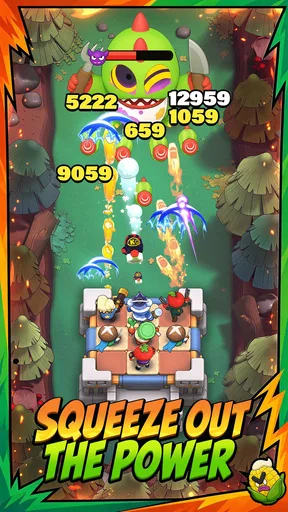
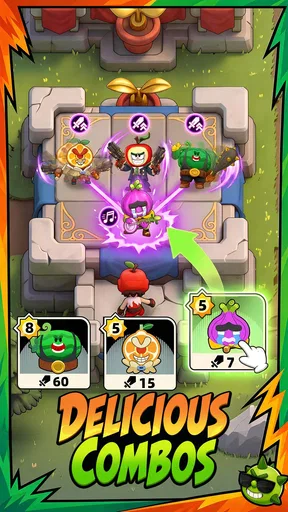
Plants on Fire: Clash & Defend is a strategy game focused on defending your territory with plant-based units while confronting waves of enemies. Players generally need to place, upgrade, and combine plants carefully to stop attacks and complete increasingly difficult stages. Its appeal comes from mixing tower-defense planning with fast decisions, colorful visuals, and progression systems that encourage experimenting with different team setups.
How do you play Plants on Fire: Clash & Defend?
Gameplay centers on choosing suitable plants, positioning them effectively, and managing available resources during each encounter. Different plants may specialize in attacking, slowing enemies, protecting allies, or supporting the rest of the team. Before starting a level, it is useful to review enemy types and prepare a balanced lineup. During combat, adapting your strategy is often more important than simply using the strongest available plant.
Is Plants on Fire: Clash & Defend free to download and play?
Plants on Fire: Clash & Defend can generally be downloaded without an initial purchase, although availability and pricing may vary between Android and iOS. Like many free-to-play mobile games, it may include optional in-app purchases for resources, upgrades, special items, or faster progression. Players who prefer not to spend money should review the store listing and disable purchase authentication where appropriate before handing the device to children.
Does Plants on Fire: Clash & Defend require an internet connection?
The connection requirements may depend on the version and the specific feature being used. Basic campaign gameplay may be available in some situations without a constant connection, while advertisements, cloud saves, events, updates, leaderboards, or other online services can require internet access. It is best to install the latest version and test the game before traveling, because offline functionality can change after updates or differ between platforms.
Is Plants on Fire: Clash & Defend suitable for children?
The game’s colorful plant characters and straightforward defensive mechanics may make it approachable for younger players, but parents should still check the official age rating before downloading. In-app purchases, advertising, online features, and screen-time concerns are the most important points to review. The difficulty can also become more demanding as stages progress, so parental controls and purchase restrictions are recommended if children will play independently.


